“Frank’s diagnosis clearly spoke in favour of repatriation with the Rega ambulance jet.”
Philippe Lasser, Rega flight physician
“On the evening before the repatriation, we were called out by the Jet Operations Center. I immediately studied Frank’s patient file on the computer. Frank’s diagnosis clearly spoke in favour of repatriation with the ambulance jet. The prerequisite for this is medical necessity – for example, a very serious illness or injury or inadequate care in the foreign hospital.
Frank’s injuries were serious. In addition to traumatic brain injury, the upper half of his body was particularly severely affected. Eight ribs were fractured, some of them in multiple places, as were also the collarbone, the shoulder blade and the spinous process of a vertebra. In addition, Frank’s collapsed lung had been injured by a bone splinter.
One of the main focuses of our work is to anticipate potential problems so that they don’t arise in the first place. When preparing for the flight, it was important to have all the medical equipment with us that would enable our patient to have a comfortable and pain-free flight back home. In this particular case, this included the appropriate painkillers. Patients are not always in a suitable physical condition for a flight. Unstable injuries or medical conditions, air trapped in the body or freshly operated wounds are all reasons for delaying a repatriation flight.
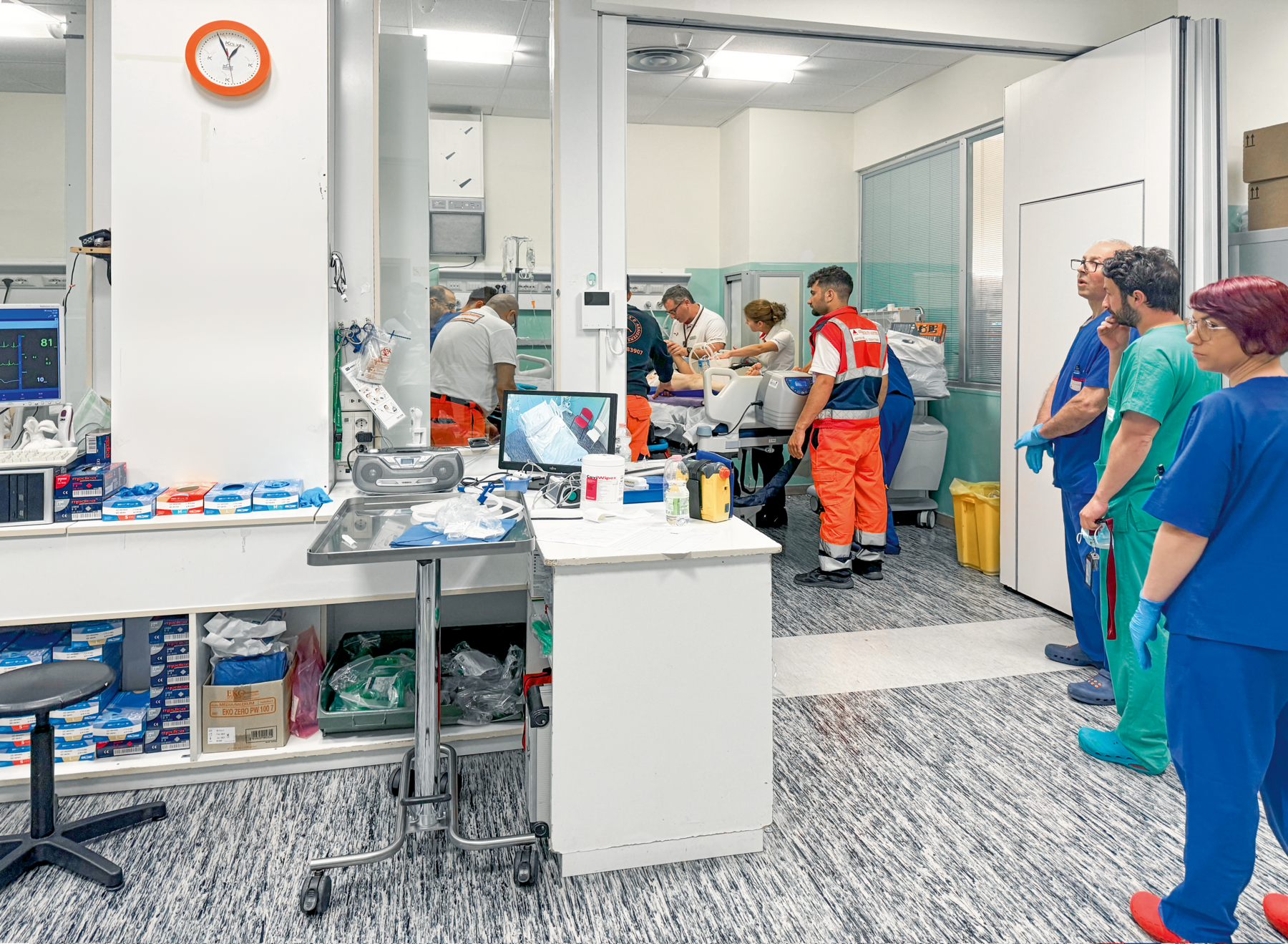
Once we arrived in southern Italy, our first challenge was to locate the patient in the hospital. It’s actually not always easy to find your way around a foreign hospital straight away. Challenges like this also make my work as a flight physician at Rega interesting. It enriches my everyday work when I’m confronted with other languages, structures or even cultures abroad. The information or tips provided by our colleagues at the Operations Center, who also support us during the mission, are very helpful in such cases.
We found Frank to be in good shape given the circumstances. The infrastructure is not comparable to that in Switzerland, but the local specialists had taken good care of him. We concentrated on relieving Frank’s pain during his transport to Switzerland. Shortly before we arrived at the hospital, he had been x-rayed again – he was in a lot of pain because he had received hardly any painkillers. For- tunately, we were able to manage this pain quickly and he was virtually pain-free for the next few hours before landing in Zurich.”